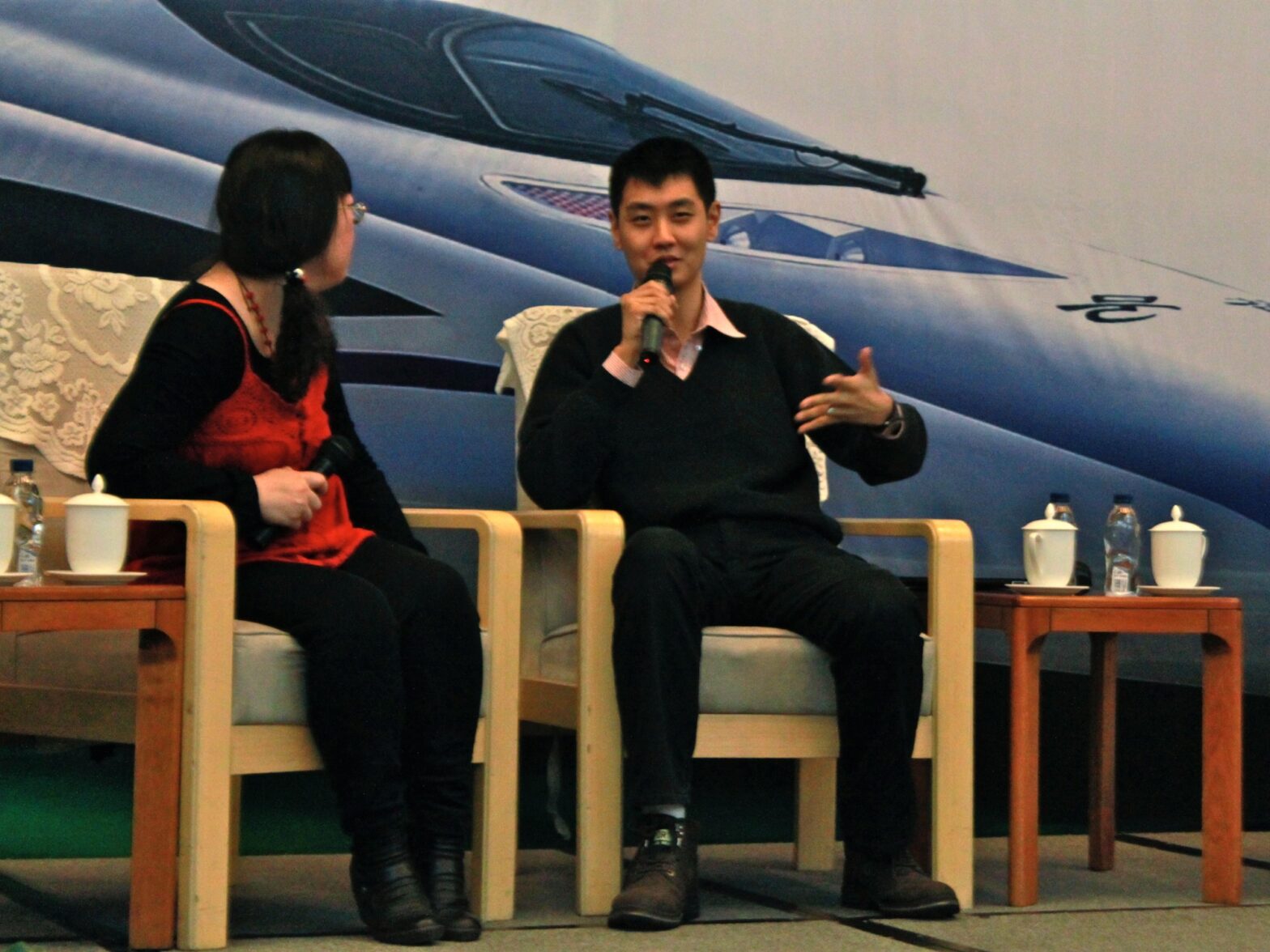
David Feng’s first “real” public talk about railways (after a public beta debut at Ignite Beijing in 2010) was on 18 March 2012, at the Railway Tower in Beijing. After finishing a round-table discussion with a Taiwanese radio presenter about the railway network of Taiwan (Classic, High Speed, Metro), he talked about railways on Mainland China, at times comparing it with Switzerland.
Switzerland, Europe, China
In his talk, Rail and Travel Worldwide, he first presented a photo of his annual travelcard on Swiss railways, as well as screenshots of his extensive travel records, a tradition which he still keeps.
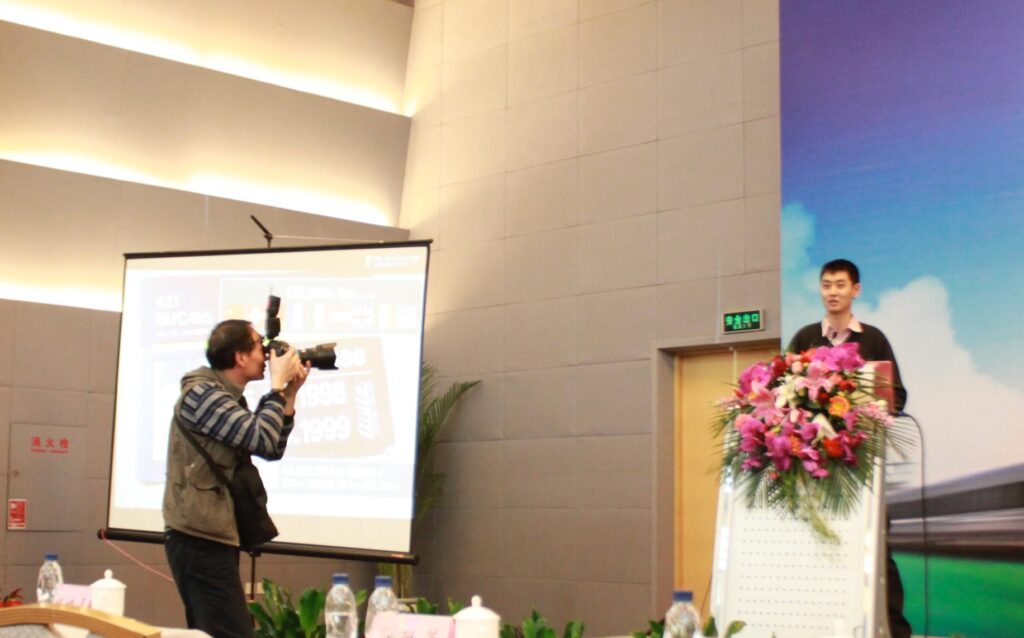
He next first dived into the rail situations across Switzerland and neighbouring countries (most significantly, Germany, France, Italy, and Austria), as well as the rest of the EU. A brief, condensed history of Swiss railways was given, starting from the launch of the Spanish Bread Train (Spanisch-Brötli Bahn) to the newest trains, as well as rail + travel offers, and integrated ticketing systems (Verkehrsverbund), all became part of his talk.
Culture, too, was a key element in his talk, as he noted a vibrant train fan (and legacy rolling stock) community in Switzerland, over comparatively more limited, and more held-back interactions in China and official organs.
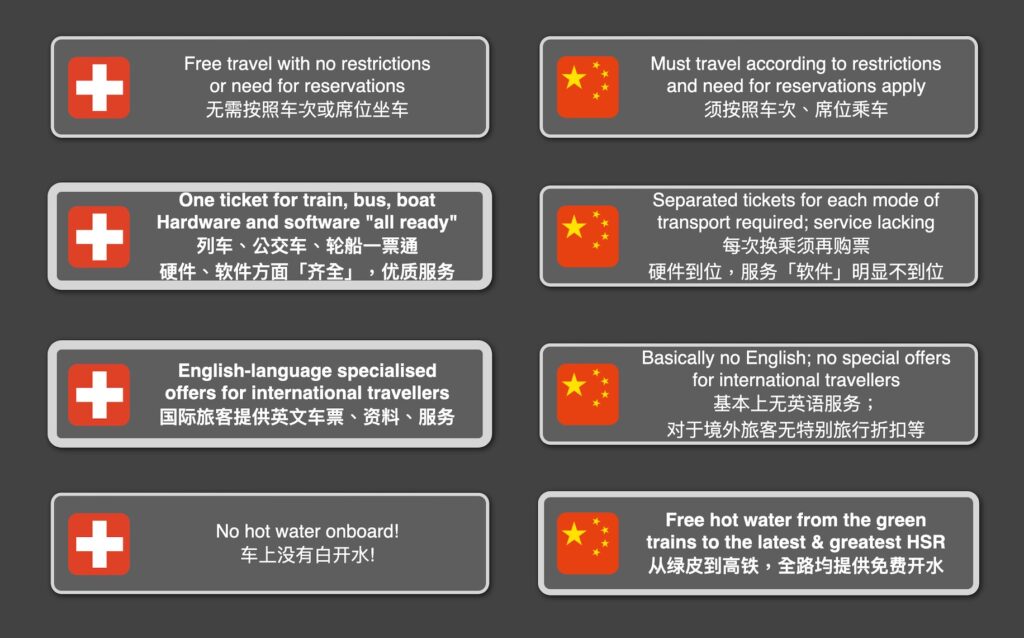
In the wake of the horror of the Wenzhou train crash, David clearly elaborated on five demands for the railways to move them out of the doldrums: Build them better, run them safer, speed them faster, serve them nicer, make it serve society more (修得更结实,跑得更安全,速度更高速,服务更周到,并满足经济社会未来发展的需求). With his debut on stage in front of the microphone, he reiterated this position.
Finally, David outlined a new focus involving him and the railways — finding and correcting Chinglish. Rail English sessions had just begun a few weeks back, and what would happen would be the institutionalisation of the Everyday Rail English campaign.
Quick Facts
- Talk delivered 18 March 2012 local time (UTC+8)
- Beijing, China
- Chinese, approximately 20 minutes
- Audience: approximately 200 persons (by seated capacity)